
Navigating the NZ School System: Curriculum, Structure, and Teaching Philosophy
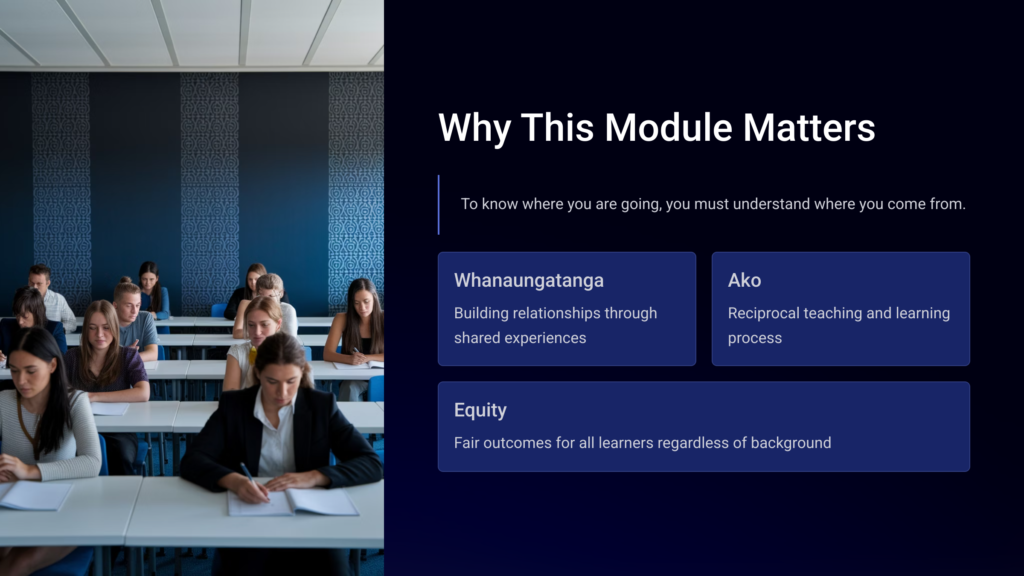
Why This Module Matters For overseas-trained teachers entering Aotearoa’s classrooms, understanding the schooling system is more than procedural—it’s foundational. New Zealand’s education system is unique in its bicultural commitments, learner-centred values, and deep community integration. It reflects a commitment to Te Tiriti o Waitangi not as policy but as lived practice.
Picture this: an overseas-trained teacher stands outside their first New Zealand classroom. The bell has rung, but the students aren’t in straight rows. There’s no salute, no “Sir” or “Ma’am.” Instead, there’s laughter, students on a beanbag, a collaborative poster in the making. Later, in the staffroom, a kaiako greets them with “Kia ora,” while mentioning the upcoming whānau hui. Everything feels familiar—and yet not.
This module prepares you for that moment of both belonging and recalibration. As one OTT shared: “It wasn’t until I attended my first pōwhiri that I truly felt the depth of what it means to be part of a learning community here.”
“To know where you are going, you must understand where you come from.” – Māori proverb For overseas-trained teachers entering Aotearoa’s classrooms, understanding the schooling system is more than procedural—it’s foundational. New Zealand’s education system is unique in its bicultural commitments, learner-centered values, and deep community integration. It reflects a commitment to Te Tiriti o Waitangi not as policy but as lived practice.
Imagine stepping into a school staffroom for the first time, where teachers greet you in Te Reo Māori, and whānau involvement is not an event but a norm. This module prepares you for those moments, not just with information, but through values. As one OTT shared: “It wasn’t until I attended my first pōwhiri that I truly felt the depth of what it means to be part of a learning community here.”
“To know where you are going, you must understand where you come from.” – Māori proverb
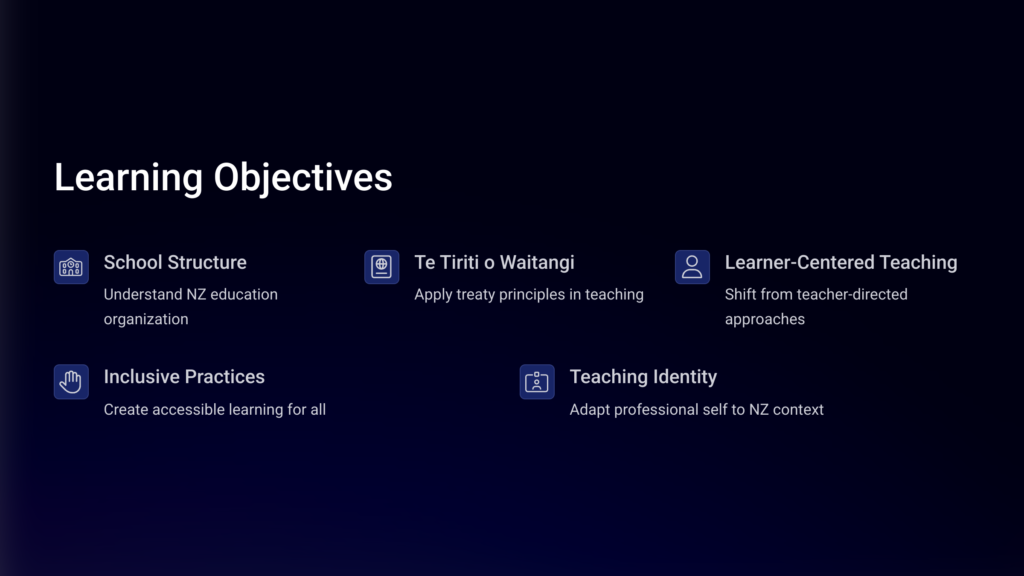
Learning Objectives You will:
- Describe the structure of the NZ school system
- Identify the role of Te Tiriti o Waitangi in education
- Explore key philosophies of learner-centred teaching
- Recognise the inclusive, equity-driven character of NZ classrooms
- Reflect on how your professional identity aligns with this environment
These outcomes align to NZQF Level 5: broad contextual understanding with reflective application. You will be encouraged to not only absorb knowledge but also critically examine your own values and assumptions as an educator.
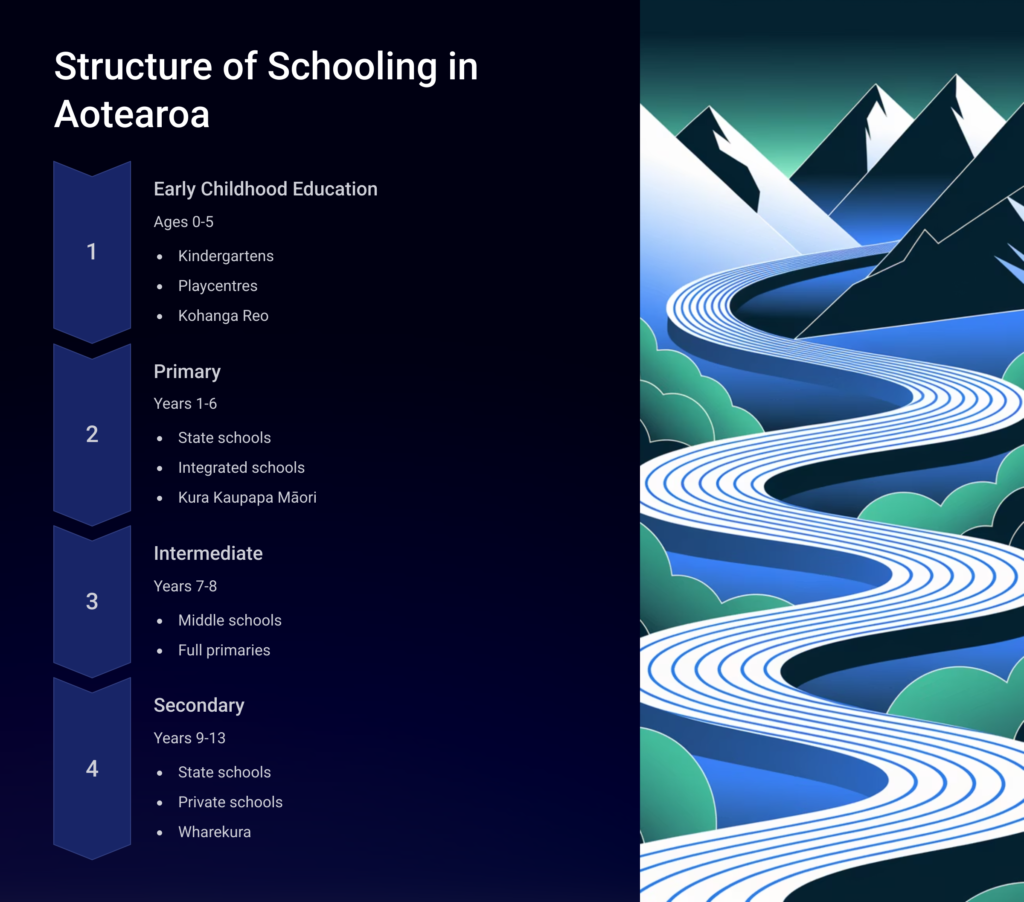
Structure of Schooling in Aotearoa NZ’s education structure balances local autonomy with national principles:
- ECE (birth–5 years), Primary (Years 1–6), Intermediate (Years 7–8), Secondary (Years 9–13)
- School types: State, State-Integrated, Private, Kura Kaupapa Māori
Each school has unique values, culture, and curriculum interpretations. OTTS often report that the most surprising aspect is how much decision-making is done at the school, not the ministry level. One primary school teacher described her surprise at how her local kura adapted the curriculum around seasonal events and local iwi stories, giving tamariki a direct connection to their whenua (land) and whakapapa (ancestry).
Metaphor: Think of the NZ school system as a braided river (he awa whiria)—multiple streams flowing together, respecting learner pathways and community diversity.
🧠We encourage you to reflect on how your previous school system differs—centralised vs. community-based? Uniform vs. localised? NZ’s education structure balances local autonomy with national principles:
- ECE (birth–5 years), Primary (Years 1–6), Intermediate (Years 7–8), Secondary (Years 9–13)
- School types: State, State-Integrated, Private, Kura Kaupapa Māori
Each school has unique values, culture, and curriculum interpretations. OTTs often report that the most surprising aspect is how much decision-making is done at the school, not ministry level.
Metaphor: Think of the NZ school system as a braided river (he awa whiria)—multiple streams flowing together, respecting learner pathways and community diversity.
🧠 How your previous school system differ—centralised vs. community-based? Uniform vs. localised?
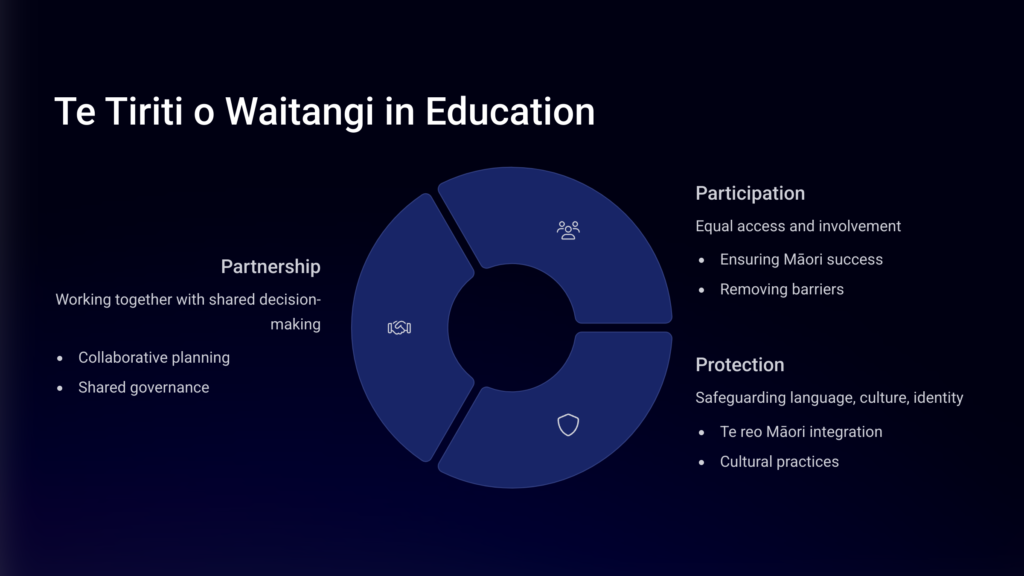
Te Tiriti o Waitangi in Education Te Tiriti o Waitangi shapes the ethical backbone of education in Aotearoa. Unlike most legal documents, this one carries a deep cultural resonance:
- Partnership means genuine collaboration with Māori communities
- Participation affirms the right of Māori learners to succeed as Māori
- Protection safeguards culture, language, and identity in daily practice
A teacher shared: “I didn’t realise that Te Tiriti wasn’t just about history—it was about the future. It showed me that my role as a teacher is to uphold a relationship, not just deliver a lesson.”
🧭 OTT Insight: Cultural humility matters more than cultural fluency. Begin with openness and commitment.
Source: Teaching Council NZ – Our Code, Our Standards
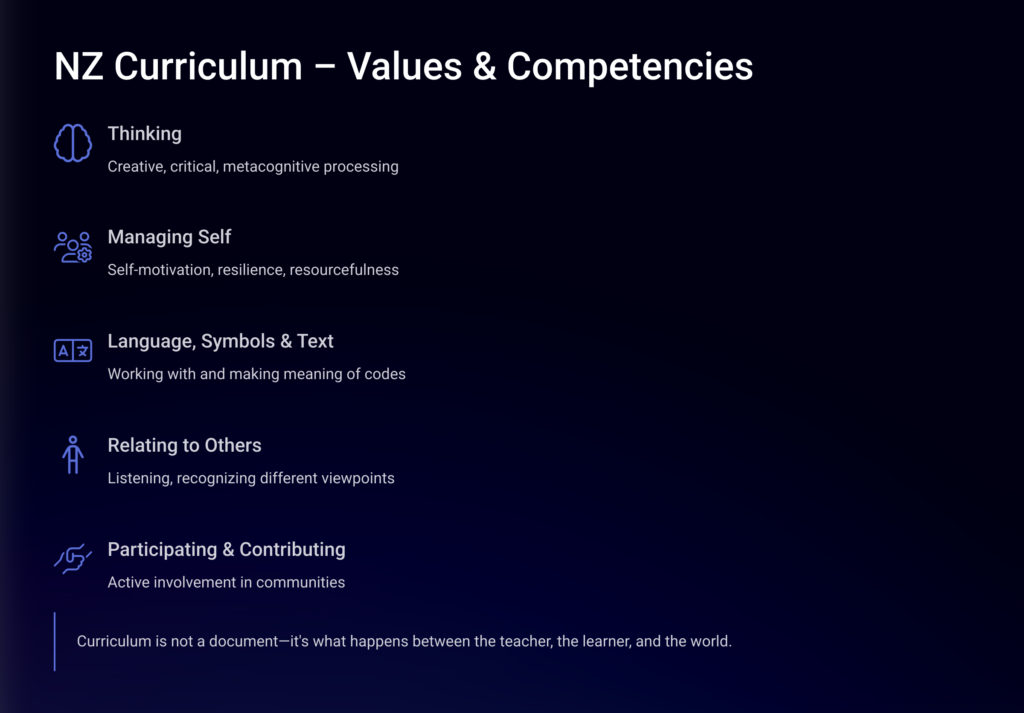
The NZ Curriculum – Key Values & Competencies The New Zealand Curriculum is not a rigid syllabus—it is a flexible framework based on:
- Vision: learners are confident, connected, actively involved, lifelong learners
- Values: excellence, innovation, equity, respect, sustainability
- Competencies: managing self, relating to others, participating and contributing, using language/symbols, thinking
🧠 Practice Tip: Begin planning with a local issue or learner story—context is king.
“Curriculum is not a document—it’s what happens between the teacher, the learner, and the world.”
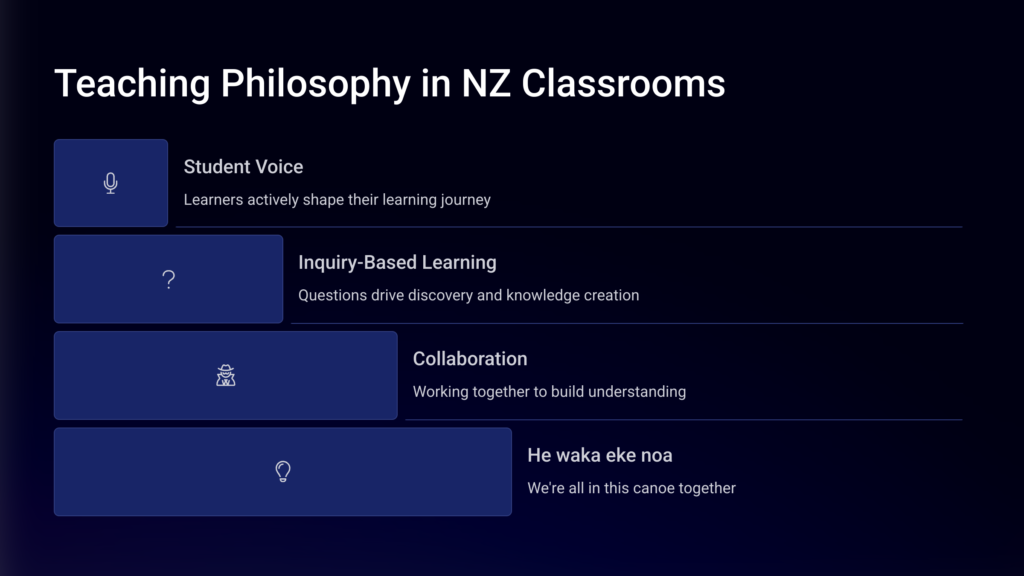
In NZ, teaching is built on trust, agency, and relationships. OTTs may notice:
- Less focus on standardised testing
- Strong emphasis on learner voice
- Informality in teacher-student interactions (often on a first-name basis)
“He waka eke noa” – A canoe we are all in together. Teachers are co-navigators, not commanders.
🎯 Reflection Prompt: In your past classrooms, how was teacher authority defined? How does this compare with the NZ model of relational pedagogy?
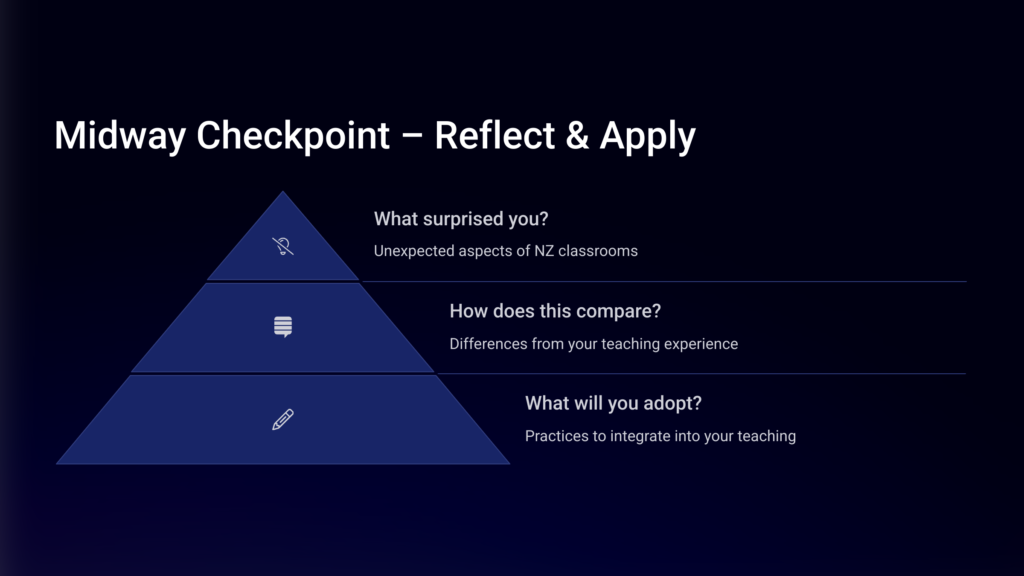
Midway Checkpoint – Reflect & Apply 💬 Question: What do you find most surprising about NZ’s school culture so far—structure, values, or curriculum? Why?
Prompt learners to journal or pair-share. Reassure them that confusion is part of cultural transition—and so is discovery.
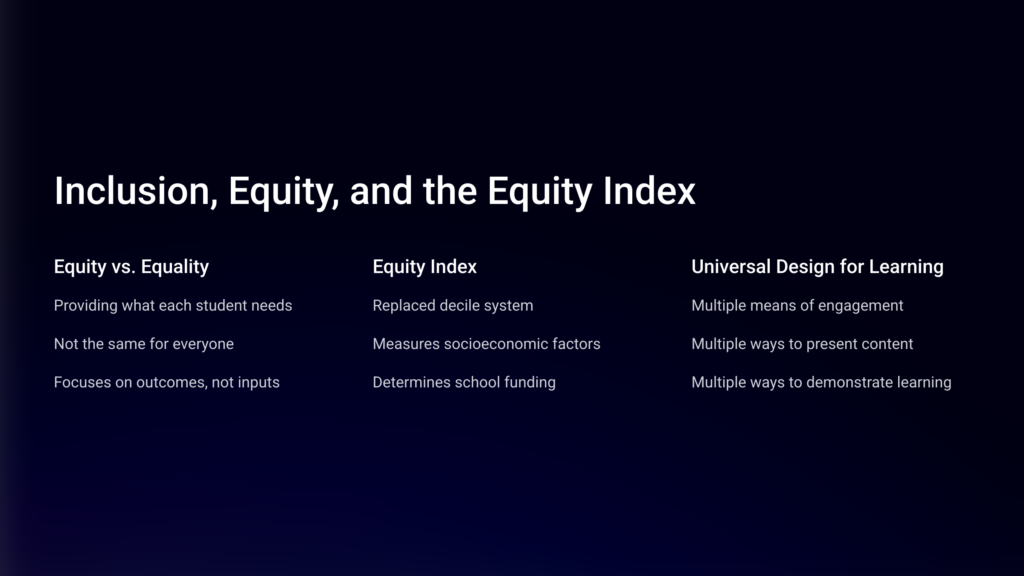
Inclusion, Equity, and the Equity Index Equity is not equality. NZ schools take a proactive stance:
- Resources are distributed based on student and community needs using the Equity Index (EQI)
- Inclusive practice is embedded into curriculum design, not added later
- Diversity includes neurodivergence, language background, and socioeconomic status
🧠 Example: A teacher tailors reading resources not just by level but by cultural relevance, helping a bilingual student build confidence.
Source: Inclusive Education TKI, NZ MoE
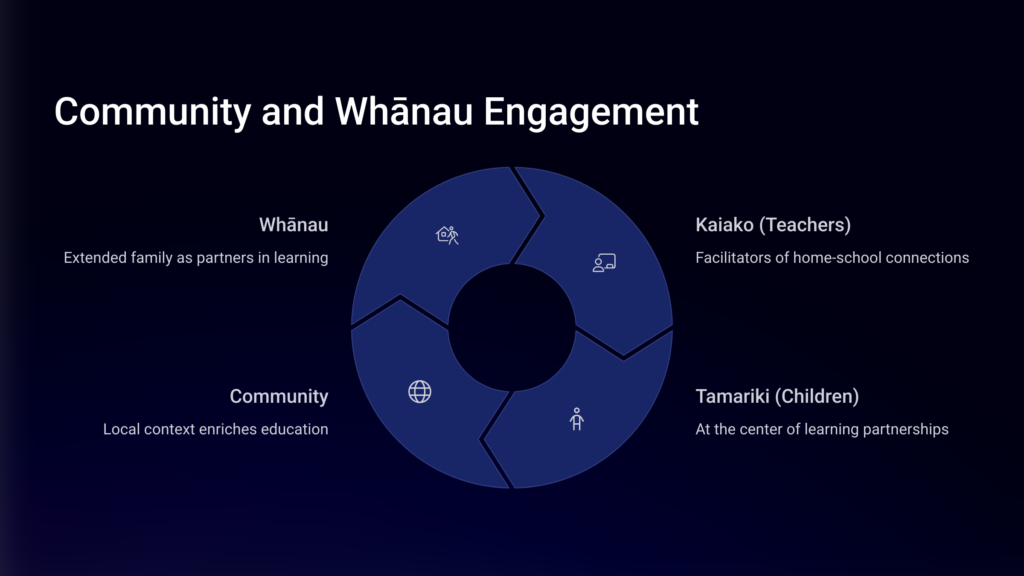
The Role of Community and Whānau Whānau (family) are seen as essential learning partners:
- Teachers are expected to maintain open and collaborative communication with whānau
- Schools often hold hui (meetings), fono (Pasifika meetings), and whānau evenings
- Building relationships before behaviour management is a common value
📖 Practice Tip: OTTs can start by asking: “What does success look like for your child?” rather than “How are they doing in class?”
“Relationships are not a ‘soft skill’—they are the infrastructure of equity.”
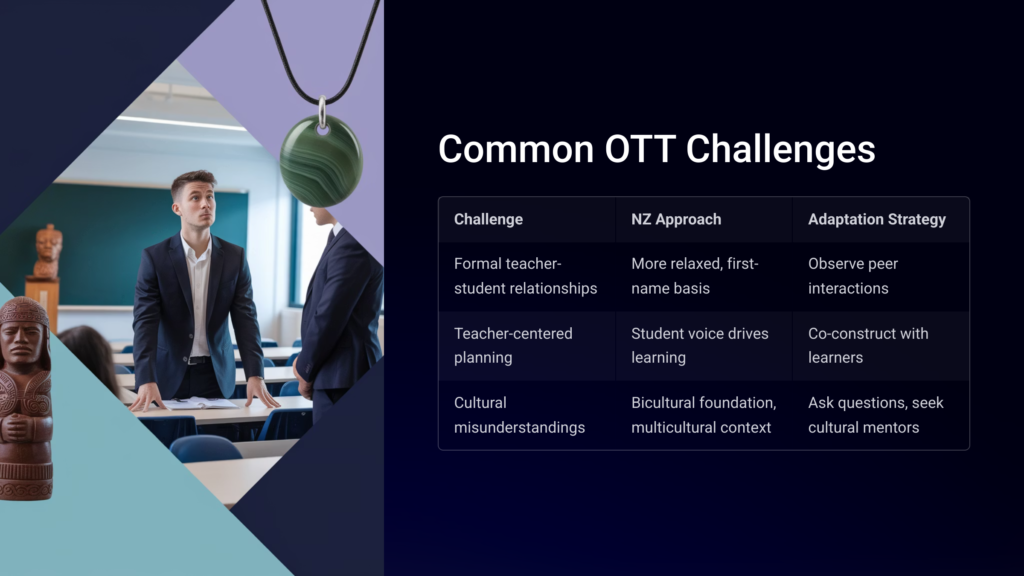
🗣️ Real OTT Voice: “I had to unlearn the idea that silence meant respect. In NZ, silence often meant confusion!”
🧶 Story Snippet: One OTT recalled her first week where she taught a class with a detailed, content-heavy lecture, only to find the learners disengaged and restless. A local teacher suggested breaking the lesson into group discussions and co-creating questions with the students. The change in engagement was immediate. “I realised they weren’t uninterested—they just weren’t used to being talked at,” she reflected.
| Challenge | Impact | Response Suggestion |
| Formal tone with learners | Misread as distant | Build rapport using humour, informality |
| Teacher-centred planning | Learner disengagement | Shift to co-construction and student inquiry |
| Confusion around local terms | Missed cultural cues | Create glossary with students as co-authors |
🗣️ Real OTT Voice: “I had to unlearn the idea that silence meant respect. In NZ, silence often meant confusion!”
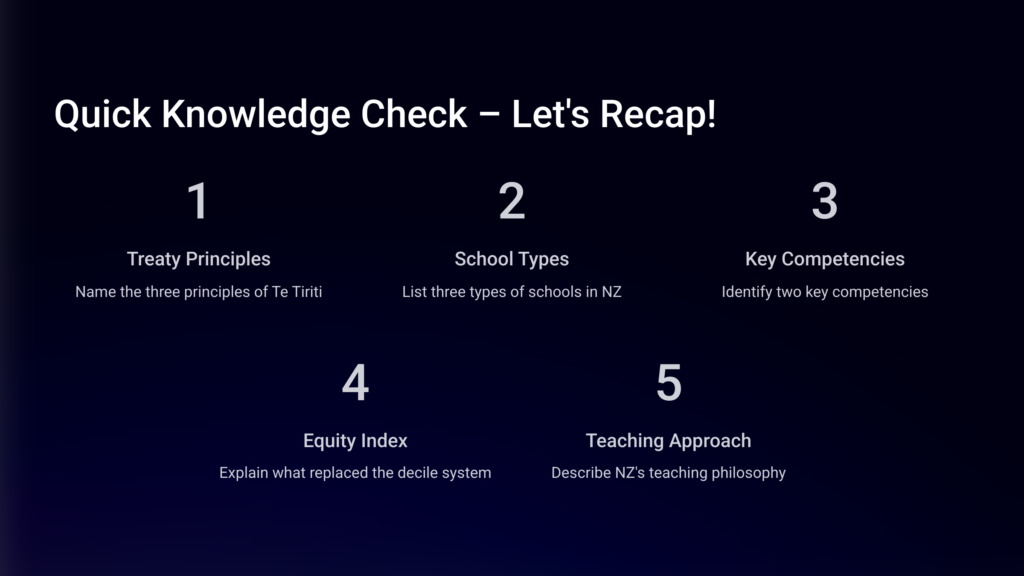
Final Quiz – Self-Check
- What is the main purpose of the Equity Index?
→ To fund schools based on student and community needs. - NZ curriculum encourages: → Flexible, values-based, and localised approaches.
- Which principle is NOT part of Te Tiriti? → Performance.
- NZ classrooms often expect teachers to: → Facilitate inquiry and foster relationships.
- A kura kaupapa Māori is: → A Māori-medium immersion school guided by tikanga Māori.
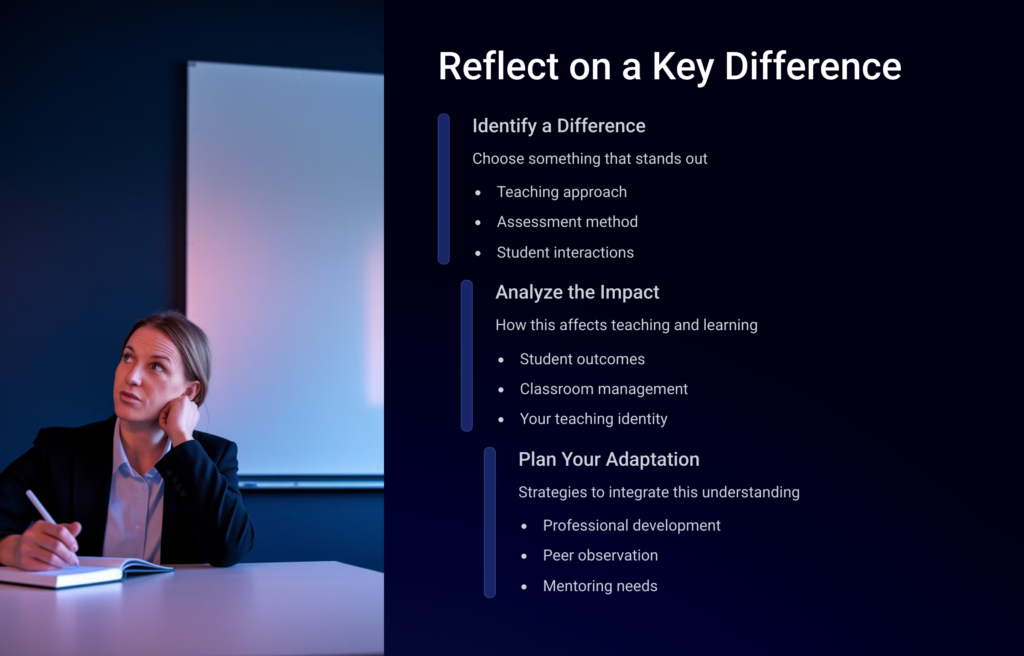
✍️ Prompt: “Reflect on one key difference between your home country’s school system and New Zealand’s. How might this difference challenge or grow your teaching practice?”
🎥 Optional: Record a 2-min verbal reflection. This can become part of your professional learning journal or practicum preparation.
- NZ Education System Overview—Education Counts: This provides an official breakdown of the NZ school system’s structure, including governance, stages, and data trends, to help contextualise your role.
- New Zealand Curriculum – TKI: Outlines the core principles, key competencies, and values that shape teaching and learning in NZ—essential reading for aligning your practice.
- Te Tiriti o Waitangi and Education – Teaching Council: Explains your professional obligations and opportunities as a Treaty partner in education.
- Inclusive Practice Guide – TKI: Offers practical strategies to create inclusive environments that respect learner diversity, neurodiversity, and linguistic and cultural differences.
These resources have been curated to give you practical insights and official guidance that support real-world classroom effectiveness, professional growth, and cultural responsiveness in Aotearoa.